 Ruscaceae M. Roemer. Ruscus Family.
As here circumscribed, a family of about 28 genera and 500 species, of North America, Central America, Europe, Africa, and Asia. Following the "breakup of the Liliaceae", Ruscaceae was often defined very narrowly to include a few genera with cladodes. In APG I (1998), it was recognized more broadly as Convallariaceae. In APG II (2003), Ruscaceae was listed as an "acceptable, monophyletic alternative to the broader circumscription favoured here". In APG III (2009) and APG IV (2016), Ruscaceae was simply merged into a very broad Asparagaceae. We favor and here use a 'middle ground' that recognizes at family rank major clades (in our region: Asparagaceae s.s., Ruscaceae, Agavaceae, Themidaceae, and Hyacinthaceae) in Asparagaceae sensu APG III and APG IV.
Ref: APG IV (2016); Bogler & Simpson (1995); Bogler In Kubitzki (1998a); Conran & Tamura In Kubitzki (1998a); Yamashita & Tamura (2000); Yeo In Kubitzki (1998a). Show full citations.
Hover over a shape, letter, icon, or arrow on the map for definition or see the legend. Data for arrows not developed for genera and families which may have species only occurring outside the flora area.
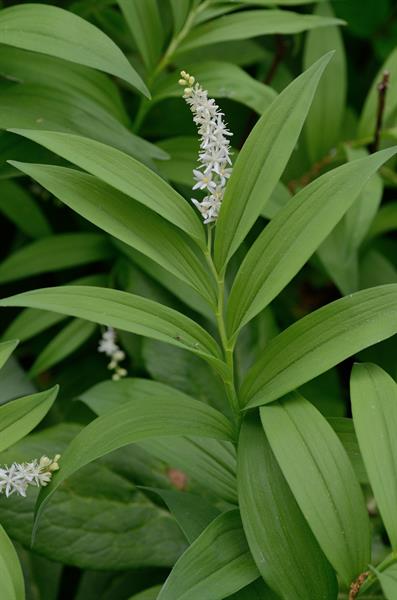 © Gary P. Fleming | Maianthemum stellatum | Original Image ⭷
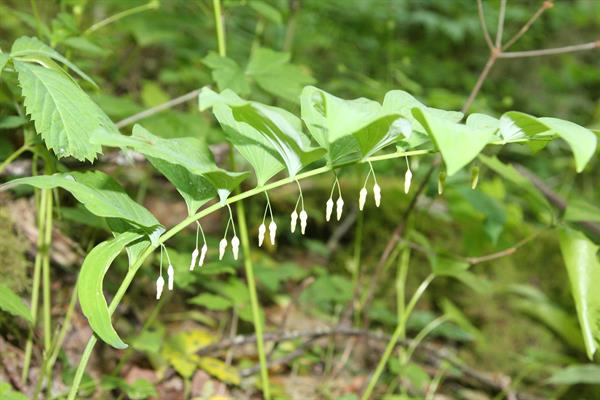 © Bruce A. Sorrie | Polygonatum | Original Image ⭷
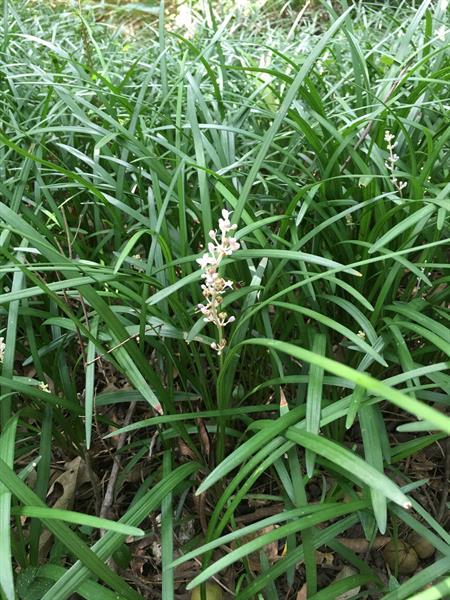 © Alan Weakley | Liriope source | Original Image ⭷
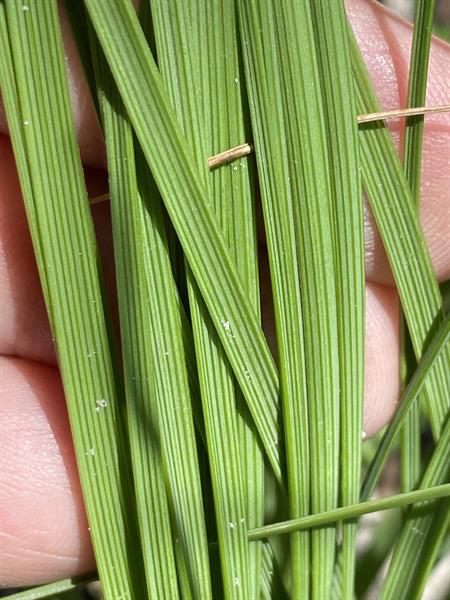 © Alan Weakley | Nolina source | Original Image ⭷
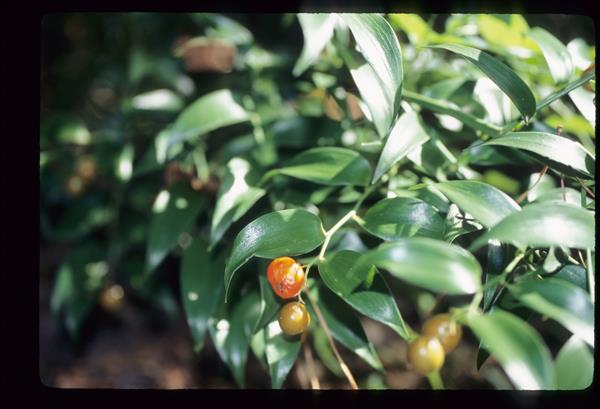 © J.W. Hardin | Danae | Original Image ⭷
Feedback
See something wrong or missing on about Ruscaceae? Let us know here: (Please include your name and email if at all complicated so we can clarify if needed.)
Cite as...