 Arabis Linnaeus. Rockcress.
The circumscription of Arabis has changed greatly; there is increasing evidence that the broad circumscription traditionally employed in most North American floras includes discordant elements. Based on molecular phylogenetic studies and morphology, the members of Arabis (as circumscribed most broadly) in our area should be divided into five genera in our region, as follows: Arabidopsis, Arabis sensu stricto, Boechera, Borodinia, and Turritis.
Ref: Al-Shehbaz (1988a); Al-Shehbaz (2003); Al-Shehbaz (2010a) In Flora of North America Editorial Committee (2010); Al-Shehbaz (2017); Hopkins (1937); Koch & Al-Shehbaz (2002); Koch, Bishop, & Mitchell-Olds (1999); Rollins (1993). Show full citations.
Hover over a shape, letter, icon, or arrow on the map for definition or see the legend. Data for arrows not developed for genera and families which may have species only occurring outside the flora area.
 © Alan M. Cressler | Arabis georgiana | Original Image ⭷
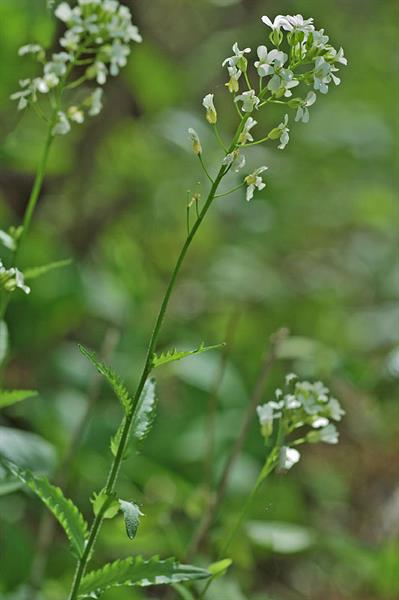 © Gary P. Fleming | Arabis patens | Original Image ⭷
 © Gary P. Fleming | Arabis adpressipilis | Original Image ⭷
 © Gary P. Fleming | Arabis adpressipilis | Original Image ⭷
Feedback
See something wrong or missing on about Arabis? Let us know here: (Please include your name and email if at all complicated so we can clarify if needed.)
Cite as...