| Family | Scientific Name | Common Name | Habitat | Distribution | Image |
|---|---|---|---|---|---|
| Fagaceae | Quercus acerifolia | Maple-leaf Oak | Glades and dry ridge-tops, calcareous glades, calcareous woodlands. | Apparently endemic to AR. |  |
| Fagaceae | Quercus acutissima | Sawtooth Oak | Commonly cultivated as a suburban street tree and also widely planted in ‘wildlife food plots’, rarely naturalizing. | Native of Japan. This species has been a popular recommendation for ‘wildlife plantings’ in the recent past, and entire stands can be encountered in relatively remote areas, planted by federal and state land management agencies; why ‘wildlife’ species in our area need more oak trees is somewhat mystifying! Spreading from plantings in Knoxville, TN (D. Estes, pers. comm., 2007). Reported as naturalizing in NJ (Schmidt 2023). |  |
| Fagaceae | Quercus alba | White Oak | Mesic to xeric forests. | ME west to MN, south to Panhandle FL and e. TX. |  |
| Fagaceae | Quercus arkansana | Arkansas Oak | Dry bluffs. | Sw. and wc. GA and Panhandle FL west in a fragmented distribution to sw. AR and e. TX. |  |
| Fagaceae | Quercus austrina | Bluff Oak | River bluffs, mesic hammocks, dry hammocks, natural levees of brownwater rivers, over mafic rocks, on shell or calcareous sediments. | Essentially a Southeastern Coastal Plain endemic: sc. NC south to n. FL and west to MS, and apparently disjunct in sw. AR. |  |
| Fagaceae | Quercus bicolor | Swamp White Oak | Bottomland swamps and wet forests with calcareous sediments, upland depression swamp forests over mafic rocks such as gabbro or diabase. | ME, ON and MN, south to NC, SC (Nelson 1993), TN, n. AL, MS, and s. MO. |  |
| Fagaceae | Quercus boyntonii | Boynton Oak | Dry forests. | Ne. AL and (possibly) TX. |  |
| Fagaceae | Quercus buckleyi | Buckley's Oak | Woodlands and forests over calcareous rocks. | OK south to sc. TX. |  |
| Fagaceae | Quercus cerris | Turkish Oak, "European Turkey Oak" | Suburban woodlands. | Native of c. and se. Europe and w. Asia. |  |
| Fagaceae | Quercus chapmanii | Chapman Oak | Dry pinelands, longleaf sandhills, scrubby flatwoods, Florida scrub (more abundant often on white sands). | A Southeastern Coastal Plain endemic: se. SC south to s. FL, west to sw. AL. | |
| Fagaceae | Quercus coccinea | Scarlet Oak | Xeric upland forests. | Centered in the Appalachians, from s. ME south to c. AL, but ranging west to MS, ne. AR (Crowleys Ridge), s. IL, and s. MI. |  |
| Fagaceae | Quercus durandii var. breviloba | Bigelow's Oak, Scalybark Oak | Limestone outcrops, rocky areas; calcareous prairies. | S. OK and c. TX south to Mexico (COA, NLE, TAM). |  |
| Fagaceae | Quercus durandii var. durandii | Durand's Oak, Bastard Oak, Durand's White Oak | Calcareous bluffs, glades, prairies, ravines, hardwood flatwoods, bottomland forests. | Se. SC south to FL Panhandle, west to e. TX and sw. AR. |  |
| Fagaceae | Quercus elliottii | Running Oak | Mesic pine savannas, especially on loamy soils in the Middle Coastal Plain, pine rocklands. | Se. NC south to s. FL and west to s. MS. |  |
| Fagaceae | Quercus ellipsoidalis | Northern Pin Oak, Hill's Oak | Dry to mesic sandy, acidic, upland forests or slopes. | ON west to e. ND, south to n. OH, n. IN, n. IL, and n. MO; disjunct in Carter County, MO). Barely reaching our region in Carter County, MO (J. Thomas 2631), this species is distributed primarily in the upper midwestern US. |  |
| Fagaceae | Quercus falcata | Spanish Oak, Southern Red Oak | Upland forests, usually xeric or submesic, but occasionally in mesic situations. | Widespread in se. North America, north to e. OK, s. MO, s. IL, s. IN, s. OH, WV, se. PA, NJ, and reported (apparently without specimen documentation) from Long Island, NY. | 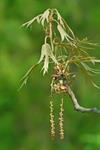 |
| Fagaceae | Quercus fusiformis | Plateau Oak, Plateau Live Oak, Encino | Dry sands, rocky areas (often calcareous), scrub; also planted eastwards of its native distribution (as in AR), and sometimes weakly naturalizing near those plantings. | E. and s. OK south through TX to Mexico (COA, NLE, TAM, VER). |  |
| Fagaceae | Quercus geminata | Sand Live Oak | Xeric sandhills (northward restricted to areas very near the coast), Florida scrub (especially yellow sands), coastal dry hammocks. | A Southeastern Coastal Plain endemic: se. NC south to s. FL, and west to s. MS |  |
| Fagaceae | Quercus georgiana | Georgia Oak | Dry slopes, ridges, and bluffs, mainly over granite and quartzite. | Sc. NC south and west through GA to c. AL; the NC population discovered by David Campbell in 2010 (pers.comm., specimens at NCU and UNCC). |  |
| Fagaceae | Quercus glauca | Japanese Evergreen Oak | Suburban woodlands. | Native of China, Japan, se. Asia, and s. Asia. Reported as aggressively establishing near plantings at Kalmia Gardens, Coker College, Darlington County, SC. |  |
| Fagaceae | Quercus hemisphaerica | Sand Laurel Oak, Darlington Oak | Longleaf pine sandhills, dry hammocks, and other dry, sandy soils, a component of maritime forests with Q. virginiana, and widely planted as a street tree in most parts of our region. | Essentially a Southeastern Coastal Plain endemic: se. VA south to c. FL and west to s. TX, north uncommonly in the interior to nc. AL, n. MS, and s. AR. |  |
| Fagaceae | Quercus ilicifolia | Bear Oak, Scrub Oak | Xeric soils in ridges in the Mountains and monadnocks in the upper Piedmont, pine-oak / heath woodlands, shale barrens, other dry and acidic sites. | Primarily Appalachian: s. ME south to w. VA, w. NC, and e. KY. In NC this scrubby oak is rare and probably declining because of fire suppression (Barden 1985), though recent ice storms have opened the tree canopy at several of its NC sites. The occurrence of Q. ilicifolia in KY was confirmed at the Devil's Teatable, Floyd County (Clark et al. 1997). |  |
| Fagaceae | Quercus imbricaria | Shingle Oak | Rich soils of upper floodplains of rivers and creeks, often at the base of the slope into the upland, also on lower slopes, upland depression swamps, and in drier forests over diabase, limestone, or other calcareous or mafic claypan soils, rarely extending to 5100 feet elevation. | Primarily midwestern, ranging from NJ, PA, n. OH, s. MI, n. IL, and c. IA, south to e. VA, nc. and w. NC, sc. TN, n. AL, and n. AR. |  |
| Fagaceae | Quercus incana | Bluejack Oak, Sandjack | Sandhills, primarily in somewhat loamier textured, submesic soils, inland from the Coastal Plain on coarse sandy alluvium or upland ridges over quartzite or other acidic rocks. | Primarily a species of the Southeastern Coastal Plain, but rarely extending inland into the Piedmont (especially on coarse sandy alluvium): se. VA south to c. peninsular FL and west to e. TX, sw. AR, and se. OK. |  |
| Fagaceae | Quercus inopina | Florida Scrub Oak | Florida scrub (white sands, especially), longleaf pine sandhills. | FL peninsula, north to St. Johns County. |  |
| Fagaceae | Quercus laevis | Turkey Oak | Longleaf pine sandhills, primarily in very xeric soils of deep sandy deposits (Carolina bay rims, old beach dunes, early Cenozoic deposits of the Sandhills Province), or inland from the Coastal Plain on dry ridges and slopes over quartzite or other acidic rock types. | Essentially a Southeastern Coastal Plain endemic: se. VA south to s. FL and west to e. LA. |  |
| Fagaceae | Quercus laurifolia | Laurel Oak | Mesic to seasonally flooded soils of floodplains, also (rarely) mesic slopes and swamps in maritime forests. | A Southeastern Coastal Plain endemic: se. VA south to s. FL and west to e. TX and s. AR. |  |
| Fagaceae | Quercus lyrata | Overcup Oak | Seasonally rather deeply and frequently flooded soils of floodplains of the Coastal Plain, less commonly in seasonally flooded swamps in Triassic basins in the lower Piedmont, and rarely in upland depression swamps of the Piedmont (developed over clays weathered from mafic rocks) and Coastal Plain. Of our oaks, Q. lyrata tolerates the wettest habitats, both in terms of depth and duration of flooding. | Primarily a species of the Southeastern Coastal Plain: DE south to Panhandle FL, west to e. TX and se. OK, north in the inland to w. TN, s. IN, s. IL, and se. MO. | 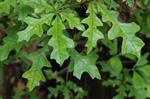 |
| Fagaceae | Quercus macrocarpa var. macrocarpa | Bur Oak, Mossycup Oak | Rich bottomland forests, sometimes in drier forests, woodlands, oak savannas, and prairie edges, and then usually over limestone or other calcareous rocks. | NB and QC west to s. MB, south to nw. VA, KY, TN, LA, and TX. |  |
| Fagaceae | Quercus margaretiae | Sand Post Oak, Margaret's Oak | Longleaf pine sandhills, typically in slightly loamy or clayey soils, not usual in the deepest and most xeric sands; outside of the distribution of Pinus palustris, in deep sandy, loamy, or rocky sites; also dry bluff forests. | Primarily a species of the Southeastern Coastal Plain: se. VA south to FL and west to c. TX and OK. |  |
| Fagaceae | Quercus marilandica var. ashei | Western Blackjack Oak | Xeric ridgetops, glades, dry prairies and cross-timber woodlands westward. | S. MO (?) and s. KS south to c. AR, e. TX, and sc. TX, especially on the Edwards Plateau (Hunt 1990). |  |
| Fagaceae | Quercus marilandica var. marilandica | Blackjack Oak | Upland forests and woodlands, usually on periodically droughty soils, as over shrink-swell clays, sandstones, deep sands, sands with clay lenses, and shallow soils over acidic bedrock. | NY (Long Island), NJ, se. PA, w. VA, s. OH, s. IN, c. IL, s. IA, and se. NE south to s. GA, Panhandle FL, and sc. TX (west to the Prairie border). |  |
| Fagaceae | Quercus michauxii | Basket Oak, Swamp Chestnut Oak | Bottomland forests, especially in fertile soils of upper terraces where flooded only infrequently and for short periods, upland depression ponds, sometimes on moist lower slopes. | NJ south to n. peninsular FL and west to e. TX and se. OK, north in the interior to s. IL and s. IN. |  |
| Fagaceae | Quercus minima | Dwarf Live Oak; Runner Oak | Florida dry prairies, dry to wet pine flatwoods, coastal fringe sandhills, pine rocklands. | Se. NC (New Hanover County) south to s. FL, west to s. MS. |  |
| Fagaceae | Quercus montana | Rock Chestnut Oak, Mountain Oak | Xeric forests of ridges and slopes, shale barrens, occasionally in mesic situations especially where rocky. | Primarily Appalachian but broadly distributed in e. North America: s. ME, NY, MI, s. UN, s. IL, and se. MO (Smith & Parker 2005) south to c. GA, c. AL, ne. MS (and LA?). |  |
| Fagaceae | Quercus muehlenbergii | Yellow Oak, Chinquapin Oak | Slopes and bluffs, on soils derived from calcareous or mafic rocks. | S. New England and ON west to WI, se. MN, and IA, south to nw. FL, TX, and n. Mexico (CHH, COA, NLE, SON, TAM). |  |
| Fagaceae | Quercus myrsinifolia | Chinese Evergreen Oak, Bamboo-leaf Oak, Chinese Ring-cupped Oak | Disturbed areas, naturalizing near rare plantings. | Native of China. Reported naturalizing at several sites in GA Piedmont by Zomlefer et al. (2018). |  |
| Fagaceae | Quercus myrtifolia | Myrtle Oak | Longleaf pine sandhills, Florida scrub (more commonly on yellow sands), oak scrub, dry flatwoods, coastal dunes. | A Southeastern Coastal Plain endemic: se. SC south to s. FL, west to se. MS. Often a dominant on xeric yellow sands in c. FL, where when fire-suppressed, can form dominant scrubby thickets. |  |
| Fagaceae | Quercus nigra | Water Oak, Paddle Oak | Bottomland forests, especially on levees or second terraces where flooded infrequently and for short periods, less commonly on mesic slopes, but also now widely distributed and common as a "weed tree" in upland situations. | Primarily a species of the Southeastern Coastal Plain: s. NJ south to s. FL and west to e. TX and se. OK, north in the interior to se. TN, c. TN, w. and sc. KY (Clark et al. 2005), se. MO, and e. OK. | 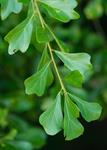 |
| Fagaceae | Quercus oglethorpensis | Oglethorpe Oak | Bottomland forests, upland oak flats over clays (Iredell and Enon soils). | Widely scattered from nc. SC, to adjacent ec. And c. GA, AL (Sorrie pers. comm. 2002), c. MS, and ne. LA. |  |
| Fagaceae | Quercus pagoda | Cherrybark Oak, Swamp Spanish Oak, Pagoda oak | Bottomland forests, especially on second terraces, also mesic to dry-mesic upland sites, especially where somewhat base-rich. | E. and c. VA south to nw. FL and west to se. TX and north in the interior to e. TN, s. IL, and s. IN. |  |
| Fagaceae | Quercus palustris | Pin Oak | Hardwood flatwoods, bottomland forests, swamps, sinkhole ponds, sloughs, wet prairies, upland sag ponds; also widely planted as a street tree in towns and cities. | MA and NY west to se. IA and e. KS, south to c. NC, nw. GA, sc. TN, n. AR, and e. OK. |  |
| Fagaceae | Quercus phellos | Willow Oak, "Pin Oak" | Bottomland forests, especially on natural levees and second terraces, also in upland depression swamps developed on clay soils and in upland clay hardpan situations, weedy and successional on slopes and upland sites as a "weed tree" following disturbance, and widely planted as a street tree in towns and cities. | Primarily a species of the Southeastern Coastal Plain: NY (Long Island), s. NJ, and se. PA south to s. GA and Panhandle FL, west to e. TX and se. OK, north in the interior to e. TN, s. KY, w. KY, s. IL, and se. MO, and e. OK. |  |
| Fagaceae | Quercus prinoides | Dwarf Chinquapin Oak | Xeric upland glades, barrens, and woodlands, on clay soils derived from mafic, ultramafic, or calcareous rocks or in sandy acidic soils, generally in sites which naturally burned rather frequently. | MA and s. MI south to NC, Panhandle FL (L. Anderson, pers.comm., 2021), OK, and TX. |  |
| Fagaceae | Quercus robur | English Oak | Rarely cultivated in our area; sometimes persisting or escaping in ne. United States, south at least to s. PA (Rhoads & Klein 1993; Rhoads & Block 2007). | Native of Europe. |  |
| Fagaceae | Quercus rubra var. ambigua | Gray Oak | Forests on ridges, slopes, and coves, in the Southern Appalachians mostly at over 1000 meters elevation. | Fairly widespread in ne. North America south to PA, and in the Appalachians to w. NC, nw. SC, and n. GA. |  |
| Fagaceae | Quercus rubra var. rubra | Red Oak | Moist to fairly dry forests of slopes, coves, and ravines, below 1000 meters elevation. | Widespread in e. North America, south to e. VA, GA, AL, MS, AR, and OK. | 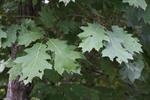 |
| Fagaceae | Quercus shumardii | Shumard Oak | Moist and fertile soils of bottomlands and moist slopes, also in xeric sites over calcareous rocks (such as limestone). | S. ON, w. NY, sc. PA, west through OH, s. MI, IN, s. IL, MO, and e. KS south to n. peninsular FL and TX. |  |
| Fagaceae | Quercus similis | Swamp Post Oak, Delta Oak | Hardwood flatwoods and bottomland hardwood forests, especially over calcareous or subcalcareous substrates. | SC south to GA, west to e. TX; disjunct in c. TN. |  |
| Fagaceae | Quercus species 1 | Glades and dry ridge-tops, calcareous glades, calcareous woodlands. | Interior Highlands of AR, MO, and OK; disjunct in limestone areas in c. TN, and e. KY, e. TN, nw. GA, and ne. AL. |  | |
| Fagaceae | Quercus stellata | Post Oak, Iron Oak | Upland forests and woodlands, especially in clay or rocky soils and in communities at least formerly exposed to fire. | Se. MA, s. NY, s. PA, s. OH, s. IN, s. IA, and e. KS south to n. peninsular FL and c. and se. TX. In KS, OK, and TX, post oak is one of the trees that forms the Prairie boundary. | 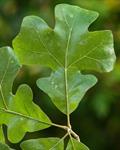 |
| Fagaceae | Quercus suber | Cork Oak | Native of Mediterranean sw. Europe and ne. Africa. |  | |
| Fagaceae | Quercus texana | Nuttall Oak, Texas Red Oak | Bottomland hardwood forests, hardwood flatwoods, swamps, also now widely planted well east of its native distribution. | AL, TN, w. KY (Clark et al. 2005), s. IL, se. MO, south and west to e. TX. |  |
| Fagaceae | Quercus velutina | Black Oak, Quercitron | Upland forests and woodlands, especially in fairly xeric and sandy soils. | ME west to MN and NE, south to Panhandle FL and TX. |  |
| Fagaceae | Quercus virginiana | Live Oak, Encino | Locally common to abundant in maritime forests and maritime scrub on barrier islands, more rarely inland (though regularly on the mainland from se. NC south, and extending substantially inland from s. SC south), sometimes in dry, fire-maintained habitats more usually occupied by Q. geminata, also planted (especially in the outer Coastal Plain). | Se. VA south to s. FL and west to TX. Villaseñor (2016) listed Q. virginiana as also fairly widespread in Mexico (CHH, COA, NLE, SLP, TAM, VER), but this is presumably based on what would now be called Q. fusiformis. |  |
Cite as...